How Modern Pilates Studios in Singapore Use Technology to Improve Movement Precision and Injury Prevention
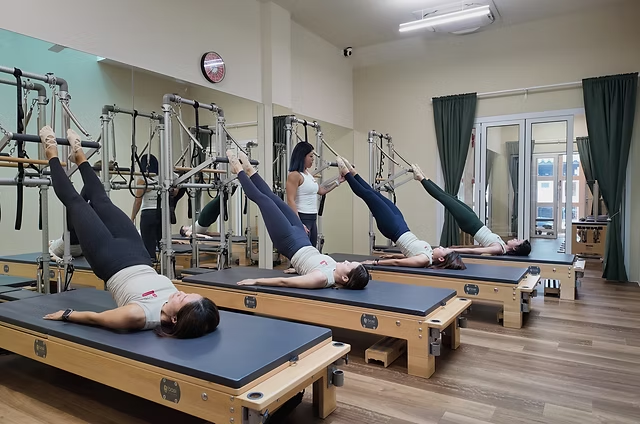
Technology has reshaped almost every aspect of urban life in Singapore, from how people work to how they manage health and wellness. Movement practices are no exception. Pilates, traditionally known for mindful and controlled exercise, has evolved alongside modern tools that enhance precision, safety, and personalisation. Today, pilates singapore is no longer just about mats and repetition. It is increasingly supported by intelligent systems that help practitioners move better, not harder.
Importantly, technology in Pilates is not about replacing human instruction. Instead, it complements expert guidance by improving awareness, consistency, and injury prevention, especially for individuals managing busy schedules or physical limitations.
The Role of Technology in Contemporary Pilates Practice
Modern Pilates studios in Singapore adopt technology with a clear purpose. The goal is not novelty, but refinement. Pilates already demands precision. Technology simply enhances the practitioner’s ability to understand and execute movement accurately.
Technology supports Pilates by:
-
Improving movement feedback
-
Supporting safer progression
-
Enhancing scheduling and consistency
-
Helping instructors personalise sessions more effectively
This integration makes Pilates more accessible and sustainable for long-term practice.
Movement Awareness and Biomechanical Feedback
One of the most valuable contributions of technology is improved movement awareness. Many people perform exercises incorrectly without realising it, especially when fatigue or stress affects concentration.
In Pilates, subtle misalignments can:
-
Increase joint strain
-
Reduce effectiveness of exercises
-
Lead to repetitive stress injuries
Technology-assisted cues help highlight alignment issues early, allowing corrections before poor patterns become habits. This is especially beneficial for desk-bound professionals who already carry postural imbalances into practice.
Enhancing Precision Without Overloading the Body
Precision is central to Pilates. Technology supports this by helping practitioners focus on quality rather than quantity. Instead of pushing for more repetitions, the emphasis remains on correct muscle engagement and smooth transitions.
This approach:
-
Reduces unnecessary joint compression
-
Minimises compensatory movements
-
Encourages controlled strength development
As a result, individuals progress safely, even when dealing with previous injuries or mobility limitations.
Supporting Injury Prevention Through Data Awareness
Injury prevention is a major concern for adults who are returning to movement after long periods of inactivity. Technology helps instructors identify patterns that may increase injury risk.
These patterns may include:
-
Overuse of dominant muscle groups
-
Poor joint alignment under load
-
Limited range of motion in key areas
By identifying these early, Pilates sessions can be adjusted to strengthen weaker areas and reduce stress on vulnerable joints.
Personalised Progression in Group Settings
Group Pilates classes are popular in Singapore due to time efficiency and community engagement. Technology helps maintain individual attention even in group environments.
This is achieved by:
-
Tracking progression levels
-
Adjusting resistance and movement complexity
-
Ensuring consistency across sessions
Personalised progression prevents overtraining and ensures that each individual advances at an appropriate pace.
Technology and Consistency in Busy Lifestyles
One of the biggest barriers to wellness is inconsistency. Long work hours and unpredictable schedules often disrupt fitness routines. Technology supports consistency by simplifying planning and accountability.
Digital tools help practitioners:
-
Schedule sessions efficiently
-
Track attendance and progress
-
Maintain routine despite lifestyle changes
Consistency is particularly important in Pilates, where gradual adaptation produces the best results.
Reducing Mental Load Through Structured Systems
Decision fatigue is common in high-pressure environments. Technology reduces mental load by providing structure, allowing individuals to focus fully on movement during sessions.
Benefits include:
-
Reduced distraction during practice
-
Improved focus on breathing and alignment
-
A clearer sense of progression
This mental clarity enhances the mind-body connection that Pilates is known for.
Integrating Technology Without Losing the Human Element
A common concern is that technology may make movement practices feel impersonal. In Pilates, this balance is carefully managed. Technology supports instruction but does not replace the role of the instructor.
Effective integration ensures:
-
Human observation remains central
-
Technology provides supplementary insight
-
Personal cues and adjustments remain prioritised
This combination preserves the mindful nature of Pilates while enhancing its effectiveness.
Supporting Long-Term Movement Health
Technology-driven insights help practitioners understand their bodies better over time. Rather than reacting to pain or discomfort after it occurs, individuals learn to recognise early signs of strain.
Long-term benefits include:
-
Improved joint longevity
-
Reduced injury recurrence
-
Greater confidence in movement
This proactive approach aligns perfectly with Pilates principles of prevention and sustainability.
Adapting to Different Life Stages and Needs
Pilates practitioners in Singapore come from diverse backgrounds, age groups, and physical conditions. Technology helps adapt sessions to these varying needs without creating rigid categories.
It supports:
-
Gentle progression for ageing bodies
-
Safe modification during recovery periods
-
Balanced challenge for experienced practitioners
This adaptability ensures Pilates remains relevant across different life stages.
Creating a Thoughtful Studio Experience
Technology is most effective when paired with a supportive studio environment. A well-designed system enhances learning without overwhelming practitioners. This is where Yoga Edition focuses on thoughtful integration, ensuring that technology enhances clarity, safety, and consistency rather than distraction.
A calm, structured environment allows individuals to benefit from innovation while staying grounded in mindful movement.
Applying Technological Awareness Beyond the Studio
The awareness gained through technology-supported Pilates often extends into daily life. As individuals become more conscious of posture, alignment, and movement patterns, they begin applying these principles outside of class.
This may include:
-
Adjusting posture at workstations
-
Moving more efficiently during daily tasks
-
Recognising early signs of tension or fatigue
These behavioural changes reinforce long-term wellbeing.
Real-Life FAQ
Q: Does technology make Pilates more complicated for beginners or returning practitioners?
A: No. When used correctly, technology simplifies learning by providing clearer feedback and structure without overwhelming the practitioner.
Q: Can technology-supported Pilates reduce injury risk?
A: Yes. By improving alignment awareness and tracking progression, technology helps identify risk factors early and supports safer movement patterns.
Q: Is technology necessary to benefit from Pilates?
A: Pilates remains effective without technology, but modern tools can enhance precision, consistency, and injury prevention when integrated thoughtfully.
Q: Will technology replace instructors in Pilates studios?
A: No. Technology supports instructors but cannot replace human observation, intuition, and personalised guidance.
Q: Is technology-supported Pilates suitable for older adults?
A: Yes. It can be particularly helpful by providing structured progression and ensuring movements remain within safe ranges.